How to Survive a Marvel Rivals Lose-and-End Challenge Without Tilt
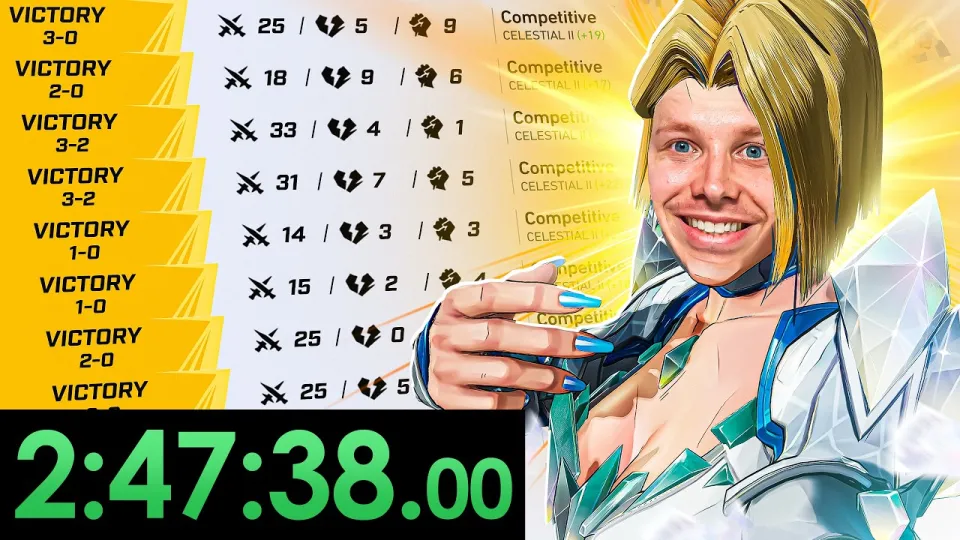
Video: IF I LOSE, THE VIDEO ENDS... (Marvel Rivals)
Want articles like this for your own video to promote it on YouTube and Google? Order them through the Telegram bot @sat_sit_bot. Articles with your video embedded are written and posted by the bot itself — on popular topical sites (no ads). Your first 50 articles are free.
· based on the channel Jay3
Key takeaways
- In a lose-and-end challenge, a single loss stops the session, so every match carries the pressure of a final.
- Jay3, a former Overwatch Grandmaster player, published a Marvel Rivals episode built on this rule on 2 October 2026.
- Marvel Rivals is a free-to-play 6v6 hero shooter from NetEase Games, launched in December 2024.
- Team composition in Marvel Rivals follows role categories: Vanguard, Duelist and Strategist.
- Hero bans and mid-match role swaps are the fastest fixes when a streak starts turning into losses.
A Marvel Rivals lose-and-end challenge is a self-imposed rule where one defeat stops the session, so the run becomes a streak test rather than a grind. You survive it by treating every match as a final: lock a comfort pick, fill the role your team is missing, and stop playing on tilt instead of chasing a comeback. The format is popular with creators because it turns ordinary ranked games into a story with real stakes, and it is easy to copy in your own queue.
What a lose-and-end challenge actually is in Marvel Rivals
In a lose-and-end challenge, the player sets a single condition before queueing: the first loss ends the video, the stream segment or the session. Marvel Rivals is a free-to-play 6v6 hero shooter from NetEase Games that launched in December 2024, and its ranked ladder makes the rule bite quickly, because a bad draft or one stubborn teammate can flip a match in a couple of minutes. The format differs from a classic win-streak challenge in one way: a win streak rewards momentum, while a lose-and-end run punishes every small mistake, so decision-making matters more than raw aim.
Jay3, a former Overwatch Grandmaster player who moved much of his content to Marvel Rivals, built an episode around exactly this premise, published on 2 October 2026. The rule is announced up front, which is the whole appeal: viewers know that any match can be the last one, and the player knows that a single throw costs the entire session.
How to set up your own lose-and-end run
A clean setup decides whether the challenge is fun or just stressful, so define the rules before the first queue pops.
- Pick one mode and stick to it. Ranked is the honest version, but Quick Match works if you want a lower-pressure run.
- Decide what counts as a loss. A disconnect or a teammate leaving still counts, otherwise the rule collapses the first time something goes wrong.
- Set a hard floor for the session. If you lose early, the run is over, and the rest of the evening goes to practice or another game.
- Record or stream it. The format lives on the reaction to the final result, and a VOD makes the run reviewable.
- Keep a one-line log of each match: hero, role, result. After five or six entries you can see which pick is actually carrying you.
Roles, team composition and the picks that end streaks
Team composition is the single biggest lever in Marvel Rivals, because the roster is split into Vanguards, Duelists and Strategists, and a team with no frontline or no healing loses slowly and then all at once. In a lose-and-end run, the temptation is to instalock a Duelist and try to carry; the safer habit is to look at what your team already has and fill the gap, even if that means playing a hero you enjoy less.
A practical checklist before the spawn doors open:
- Count the roles. Two Vanguards, two or three Duelists and two Strategists is a stable baseline; three or more Duelists usually means someone has to switch.
- Check the enemy draft for hard counters to your main and swap early rather than after two lost fights.
- Use hero bans when the mode allows them to remove the one pick that consistently beats your team.
- Swap mid-match. Marvel Rivals lets you change heroes during a match, and a late switch is often the difference between a lost push and a hold.
Why the format works so well for streamers
A lose-and-end rule converts a normal ranked session into a narrative with a visible finish line, and that is exactly why creators keep returning to it. The audience gets a countdown structure, the player gets a reason to concentrate, and every match produces a clear outcome instead of fading into a long grind. The same logic powered the Overwatch content that made Jay3's name before he branched into Marvel Rivals, and it transfers cleanly because both games reward the same fundamentals: positioning, role discipline and communication.
Jay3 streams live on Twitch, where the unedited version of these runs usually happens before it reaches YouTube.
Common viewer questions about Marvel Rivals runs
Viewers watching these episodes tend to raise the same doubts, and they are worth answering honestly. The first is whether the rule is rigged for content: in practice, the opposite happens, because a single loss ends the session, so the player has every reason to play safe rather than take risks for clips. The second is matchmaking frustration, since many players report streaks where teammates seem to give up early or pick a third Duelist without warning; the fix is not a magic queue time but role flexibility and a short break after two bad games. The third is the "I deserve a higher rank" argument, which is the most common complaint in any hero shooter and the hardest to test, because the only reliable experiment is playing a full session in a fixed role and tracking results. The fourth is the crossover question: whether skills from Overwatch transfer, and they largely do, since both games are built on ult economy, map control and cooldown tracking, though Marvel Rivals adds team-up abilities that reward coordinated picks over solo play.
Where to find Jay3's Marvel Rivals content and socials
Everything from the run is spread across Jay3's channels, and the links below are the official ones from the video description.
- Live streams: https://twitch.tv/jay3
- Twitter: https://twitter.com/jay3ow
- TikTok: https://tiktok.com/@jay3twitch
- Instagram: https://instagram.com/jay3twitch
- Discord community: https://discord.gg/jay3
Final thoughts on the lose-and-end format
The lose-and-end challenge is the simplest possible stakes mechanic, and that is why it still works in Marvel Rivals: one rule, one visible ending, no padding. Jay3's take on it, published on 2 October 2026, shows how much tension a single loss condition adds to ordinary ranked matches, and the same setup is easy to copy at home. Treat each game as the last one, fill the role your team lacks, and swap heroes before a bad draft becomes a bad streak. If you want to watch the run unfold live, follow Jay3 on Twitch and catch the next session from the first queue.
Questions & answers
What happens if you lose in a Marvel Rivals lose-and-end challenge?
The session stops at the first defeat. In video form, the episode simply ends there, which is the entire premise of the format. In your own run, you decide in advance whether a loss means logging off for the night or switching to practice mode.
Is Marvel Rivals free to play, and what roles exist?
Yes, Marvel Rivals is free to play, developed by NetEase Games and launched in December 2024. The roster is divided into three role categories: Vanguards, who hold space, Duelists, who deal damage, and Strategists, who heal and support. A balanced draft usually includes at least one Vanguard and one Strategist.
Can you switch heroes in the middle of a Marvel Rivals match?
You can change heroes during a match, and doing so is often the fastest fix for a losing round. Swapping to counter an enemy carry or to add a missing role costs nothing but the time to respawn. Many players lose streaks because they refuse to switch off a pick that is being countered.
Do Overwatch skills transfer to Marvel Rivals?
Largely yes. Both games reward positioning, cooldown tracking, ultimate economy and role discipline, which is why experienced Overwatch players like Jay3 adapt quickly. The main difference is Marvel Rivals' team-up abilities, which push players toward coordinated hero pairings rather than individual carry picks.
Source: IF I LOSE, THE VIDEO ENDS... (Marvel Rivals) · Markdown version